

A Place for Giwa
한국어Solo Exhibition by Eunhyeon Ahn | Nov 2 - 8, 2026
Gallery Koen presents A Place for Giwa, a solo exhibition by Eunhyeon Ahn at Noncontempo in Yeonhui-dong, Seoul. Noncontempo’s approach to discovering and rearranging enduring objects and ideas resonates naturally with Ahn’s practice, which reconsiders familiar forms from Korean tradition through contemporary materials and sensibilities. Based in Los Angeles and dedicated to introducing contemporary Korean artists and designers, Gallery Koen marks its first exhibition in Korea with an artist whose work the gallery has supported and presented over the years.
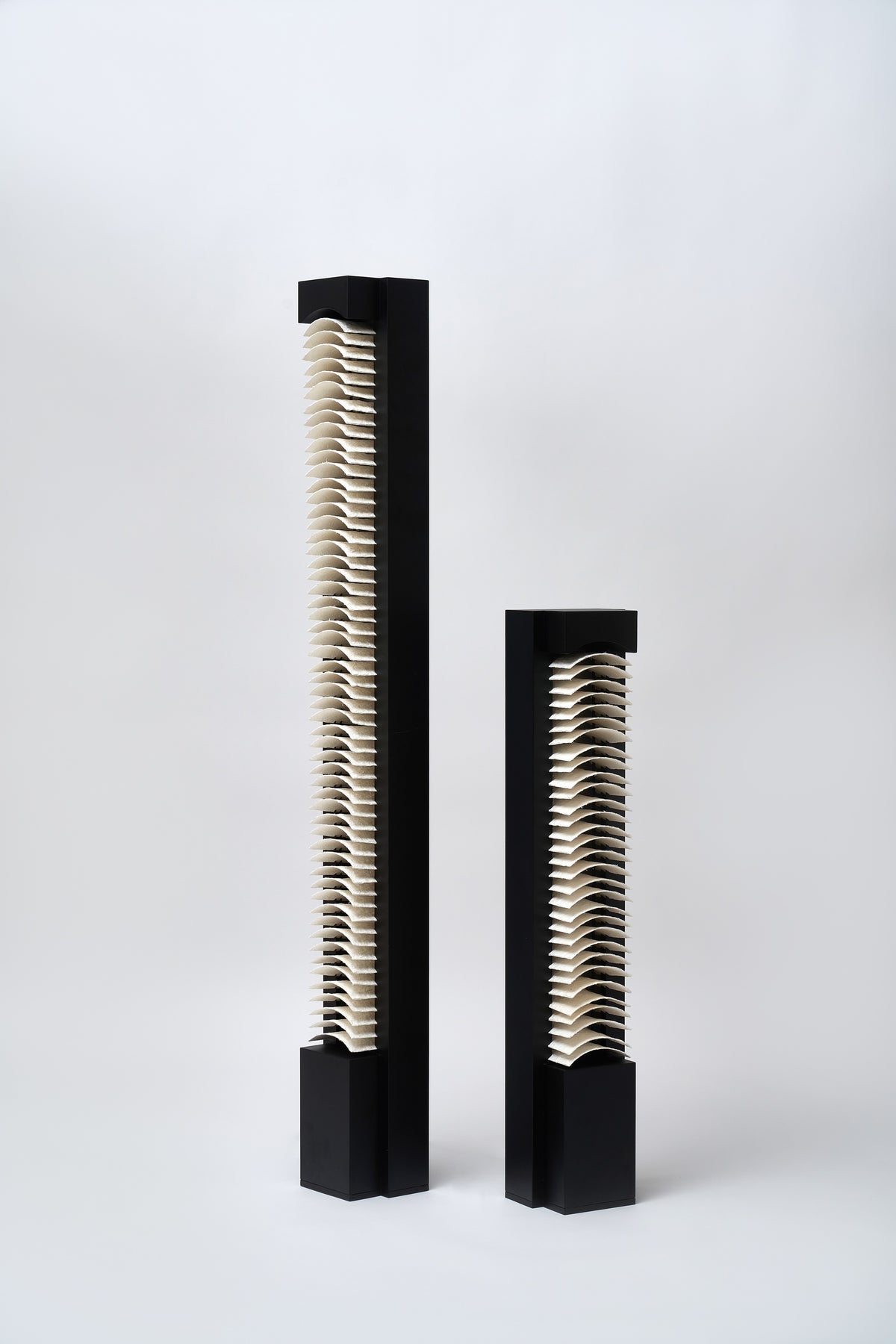
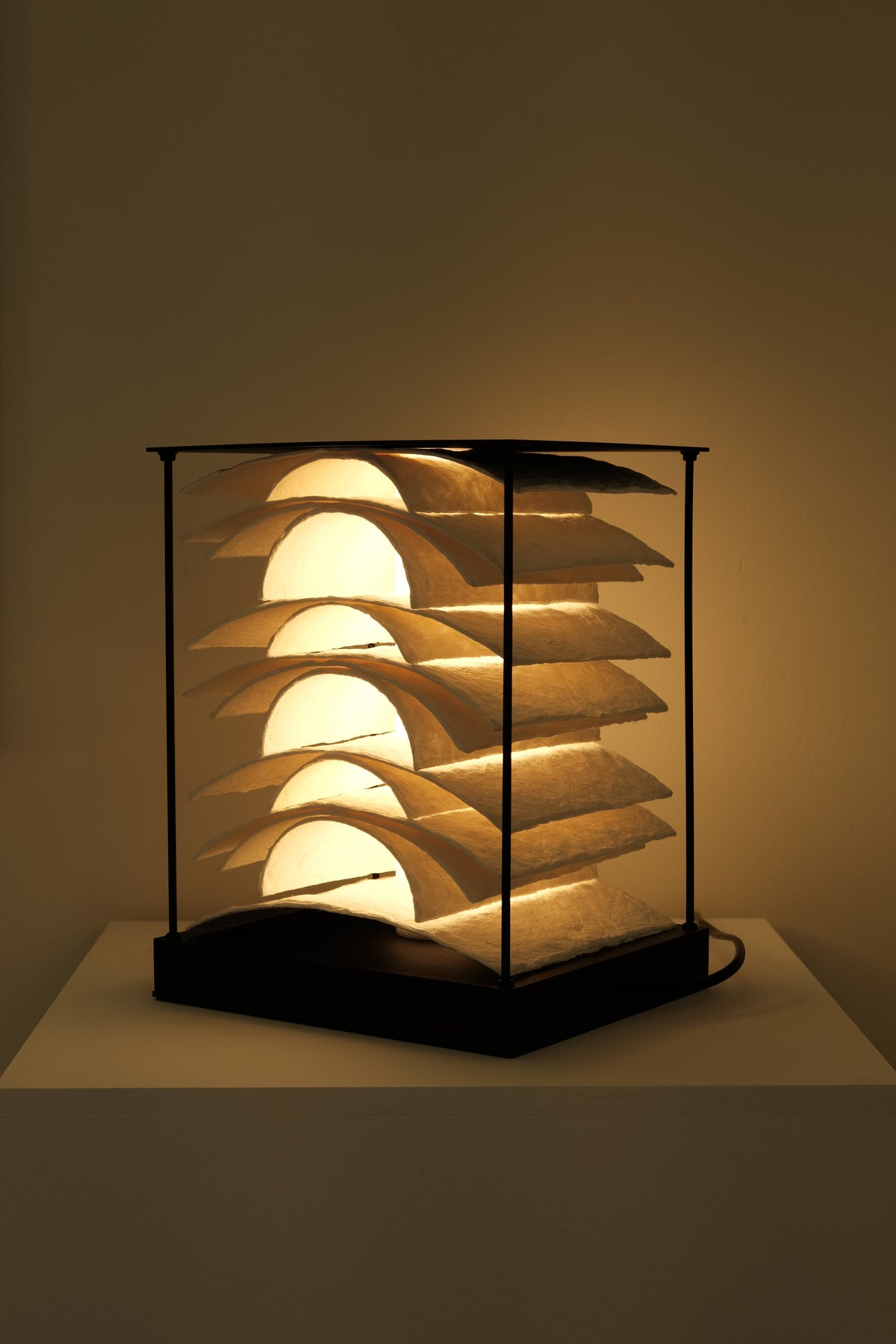
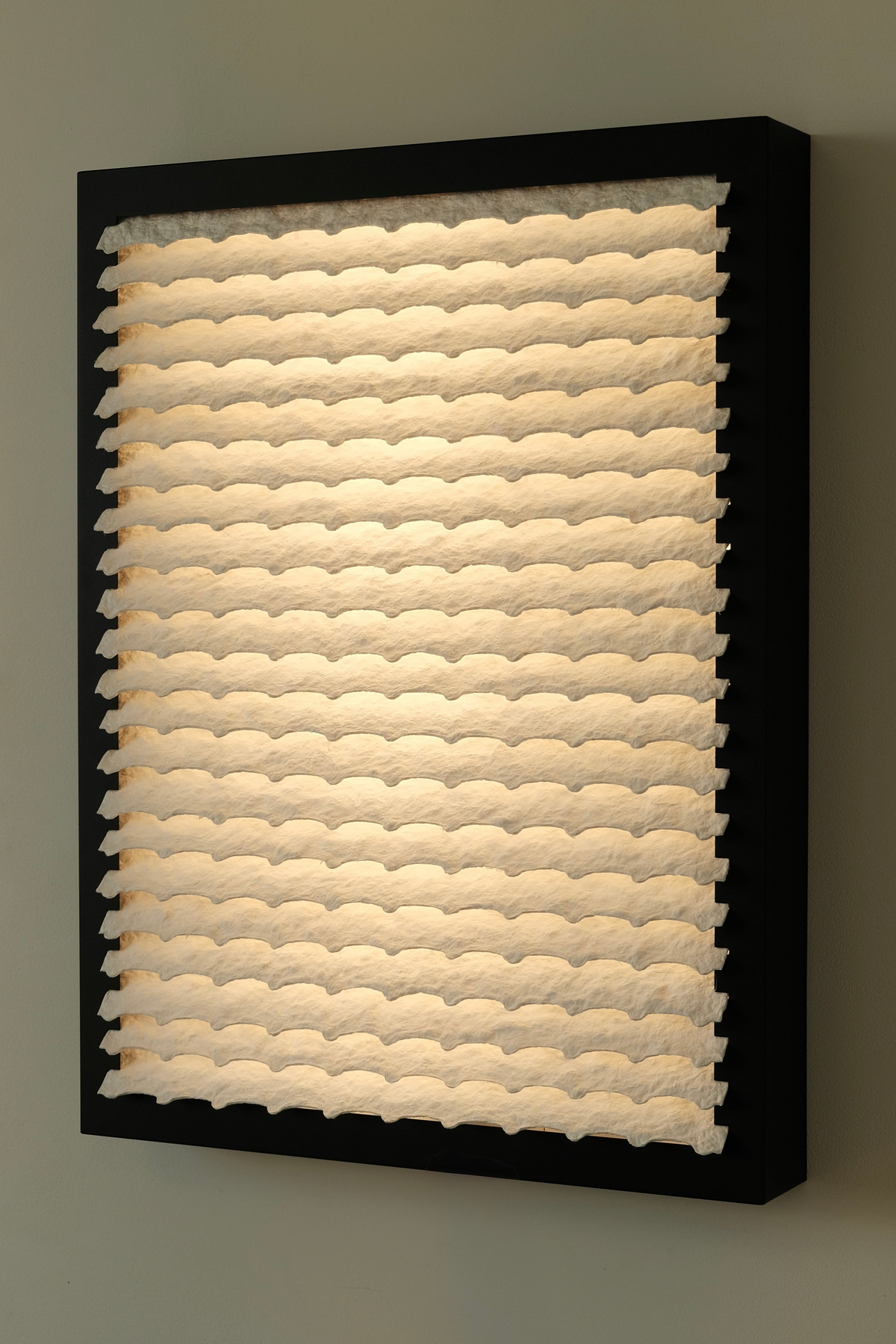
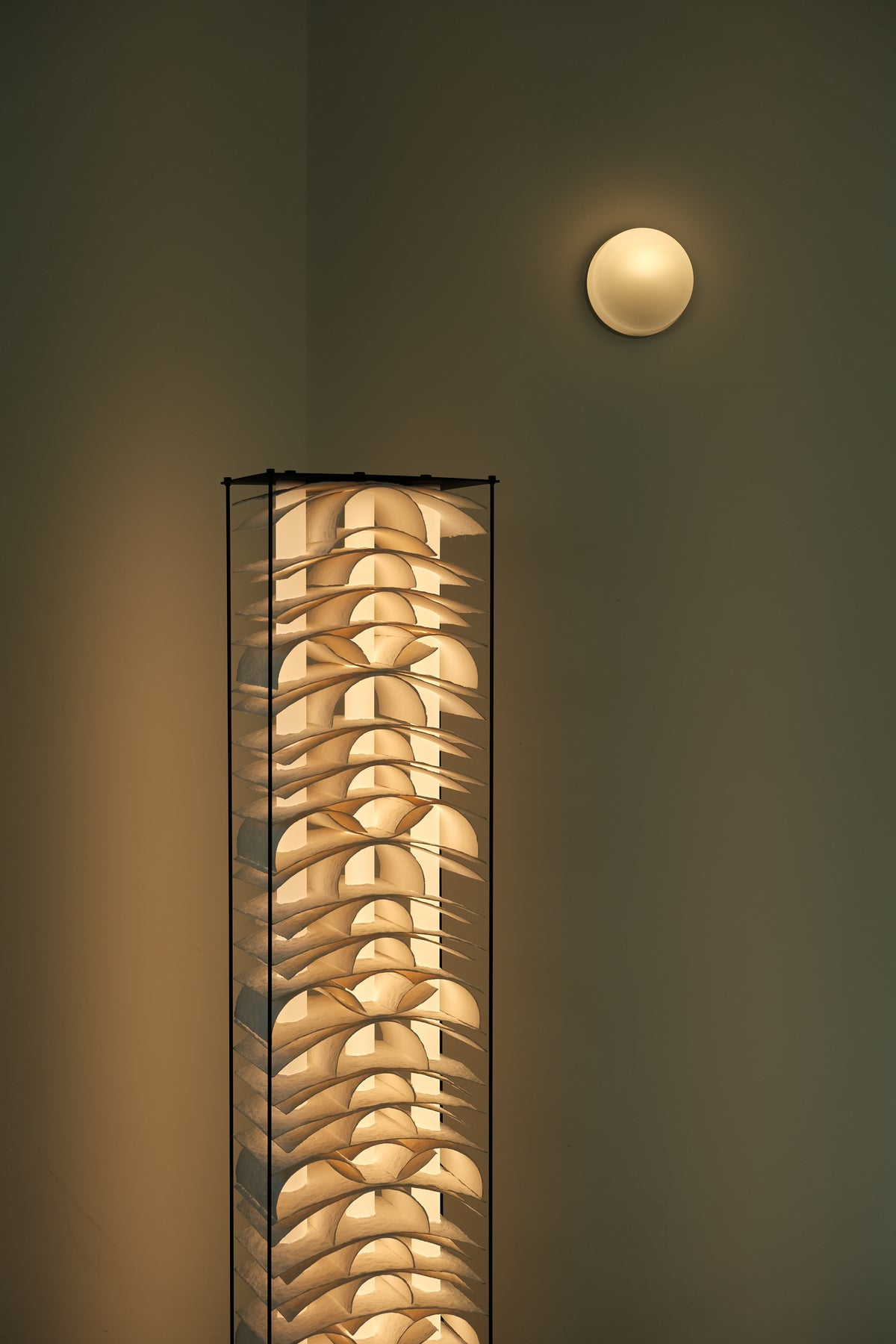
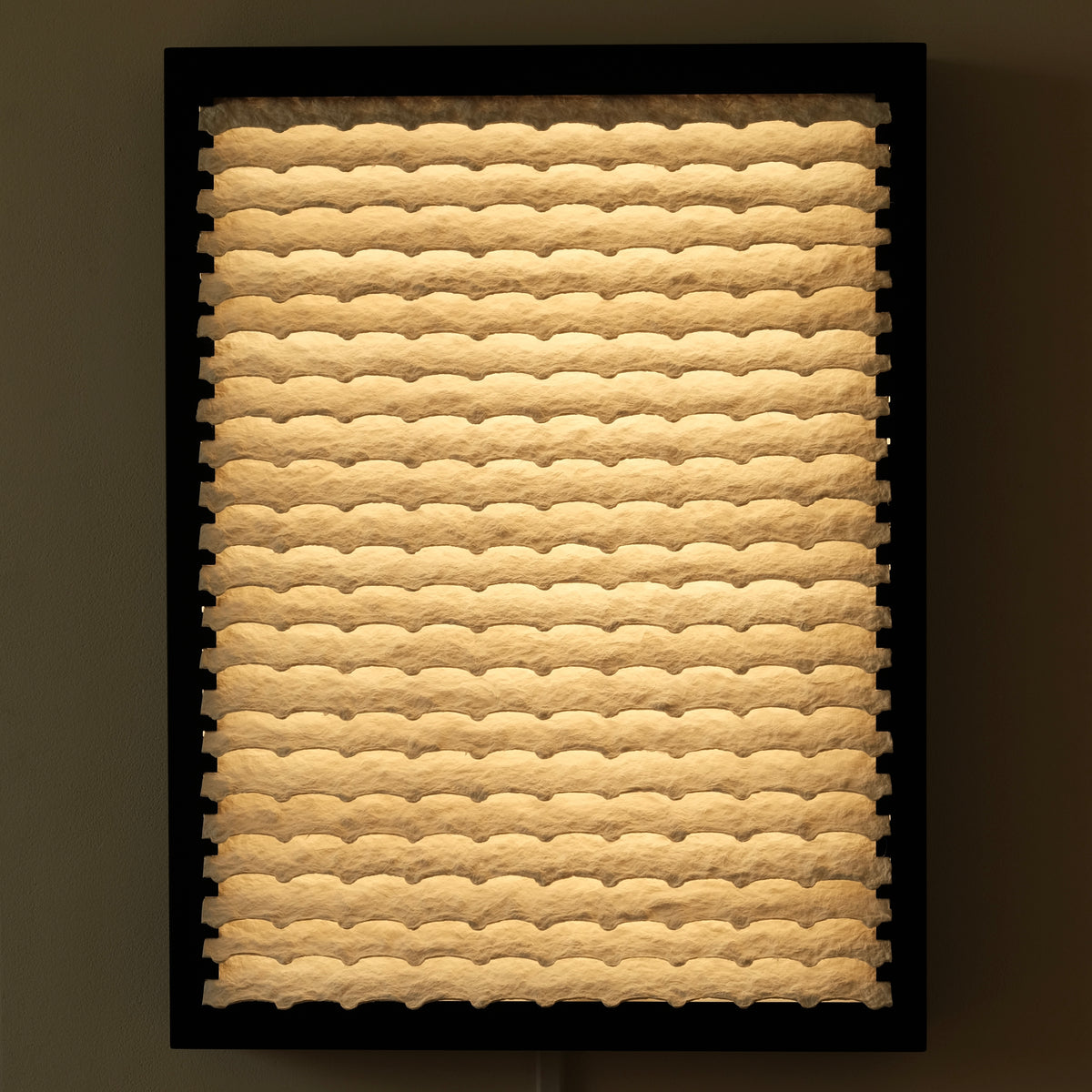
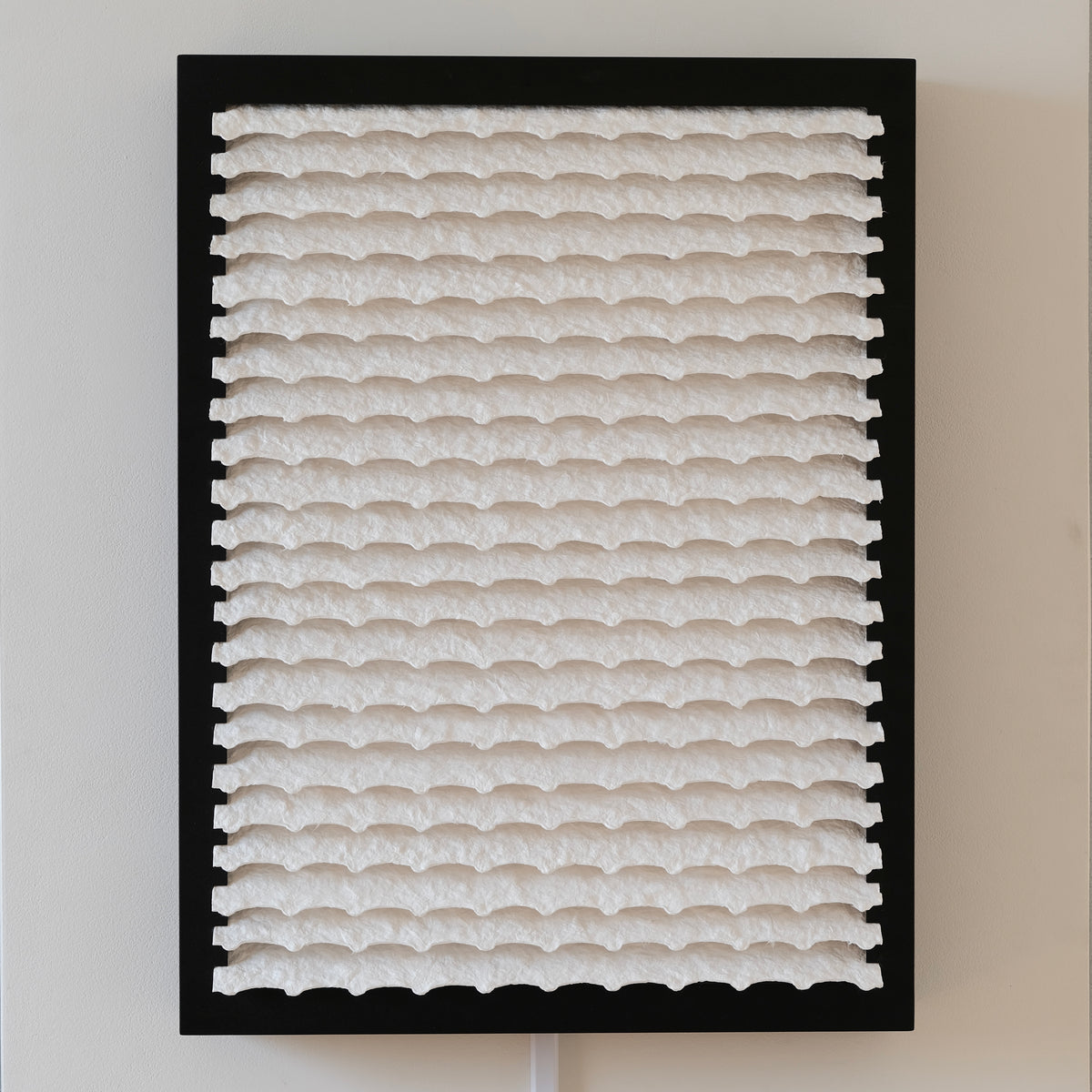
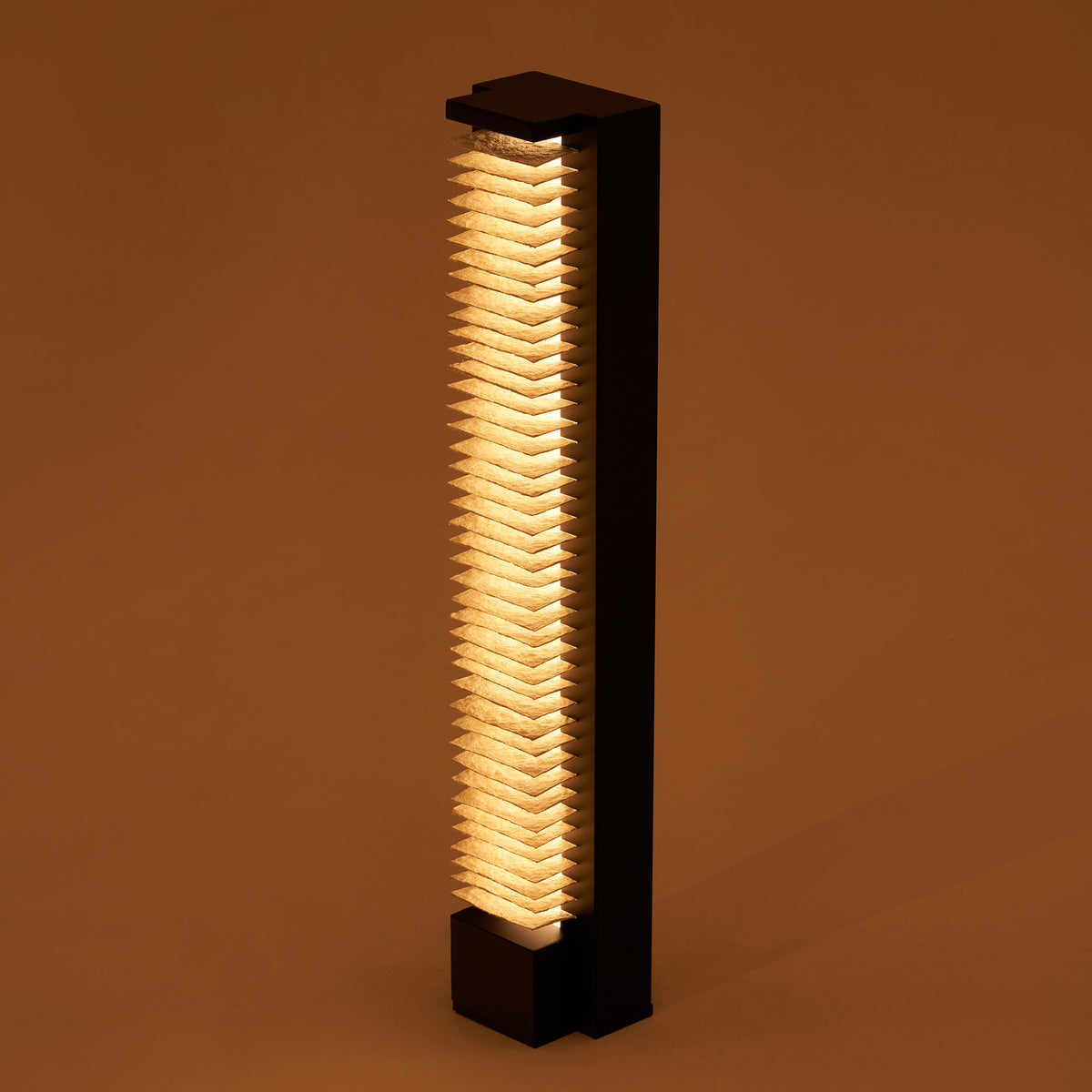
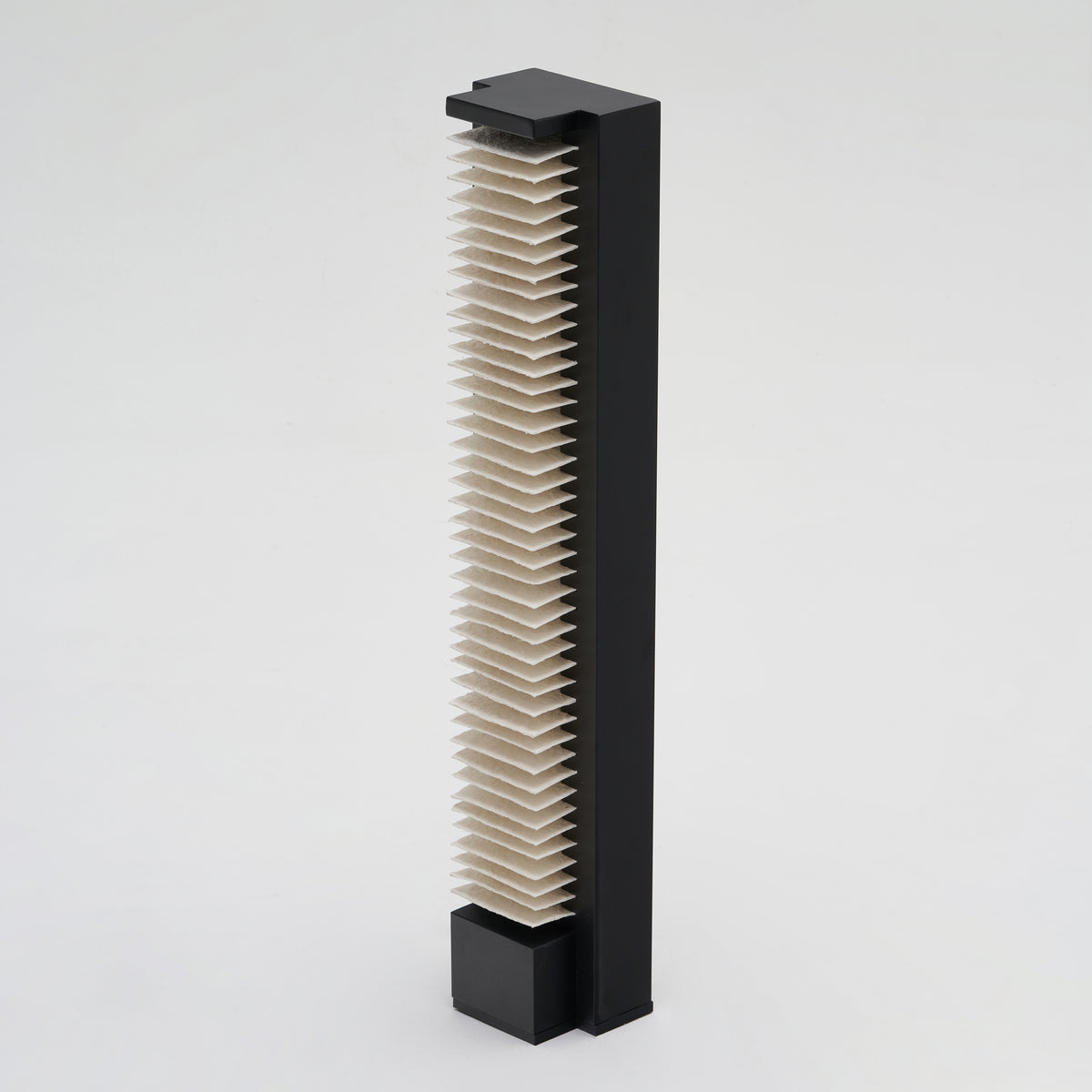
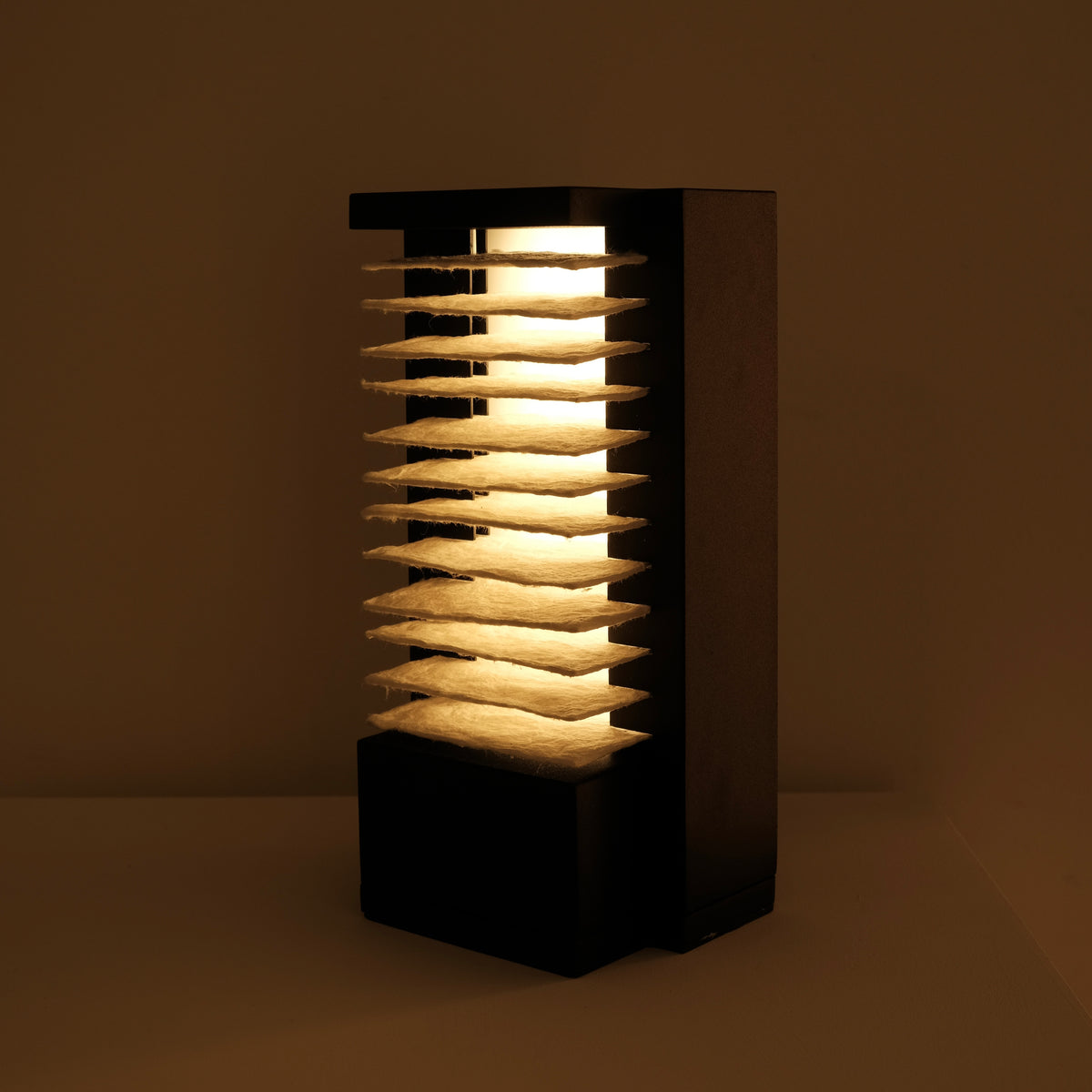
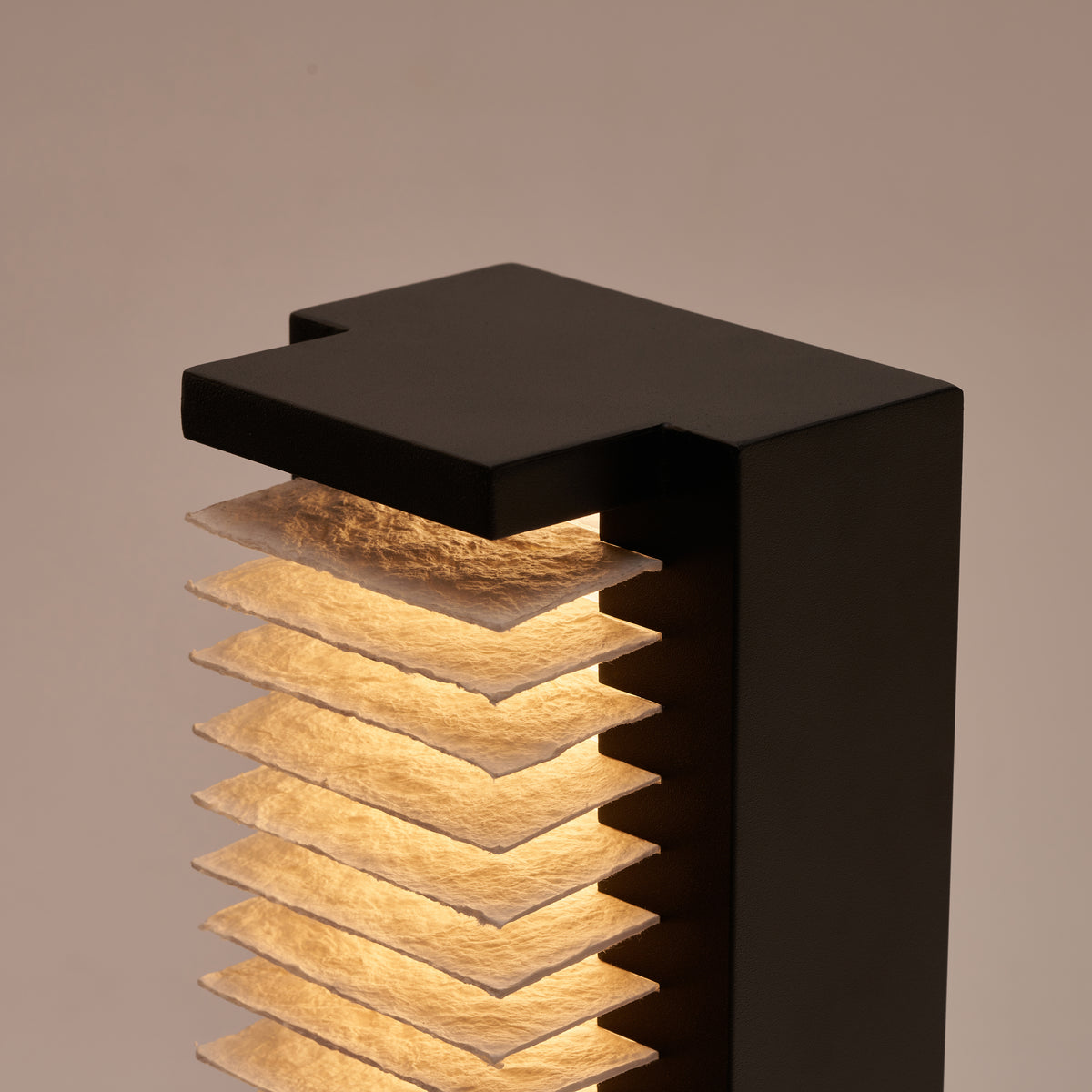
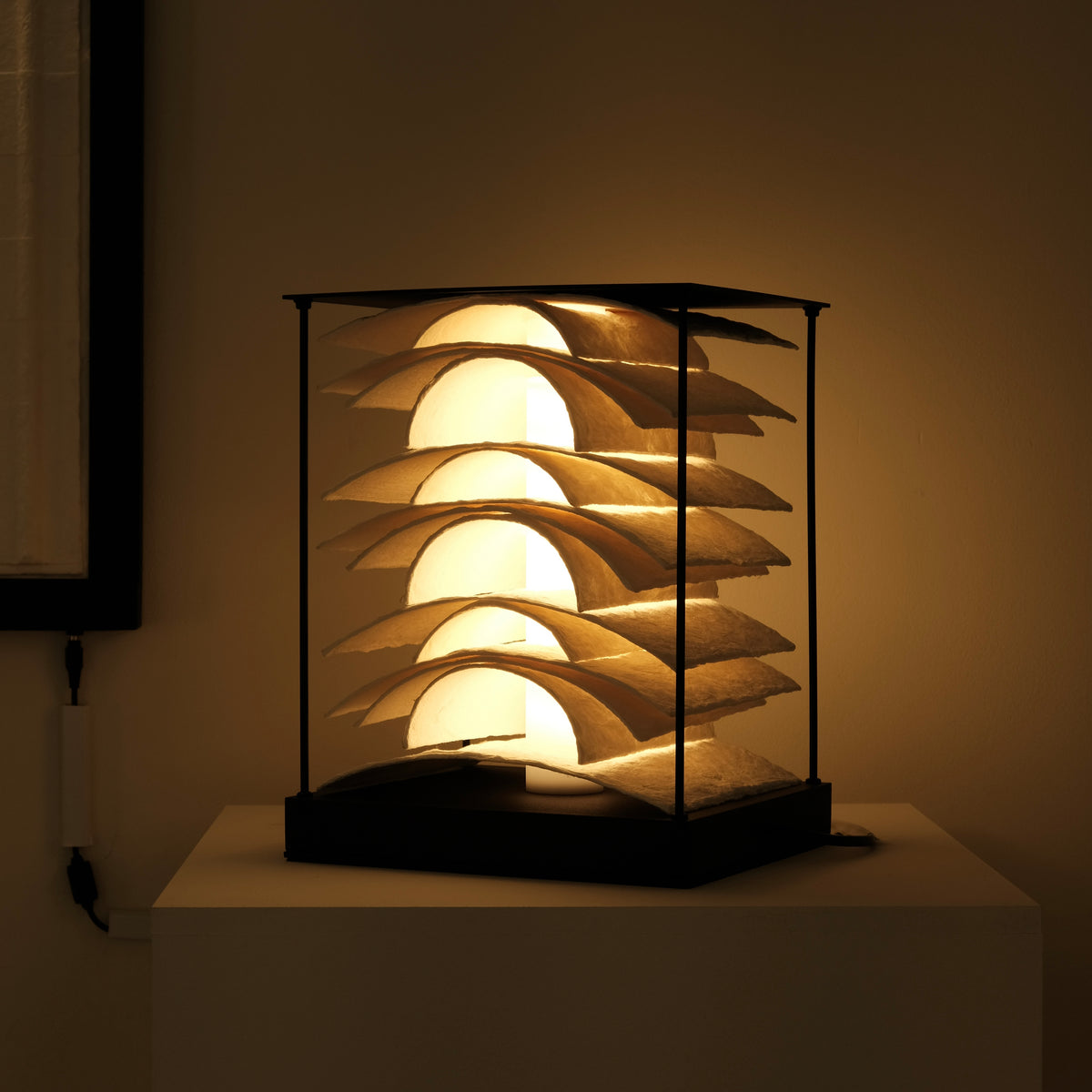
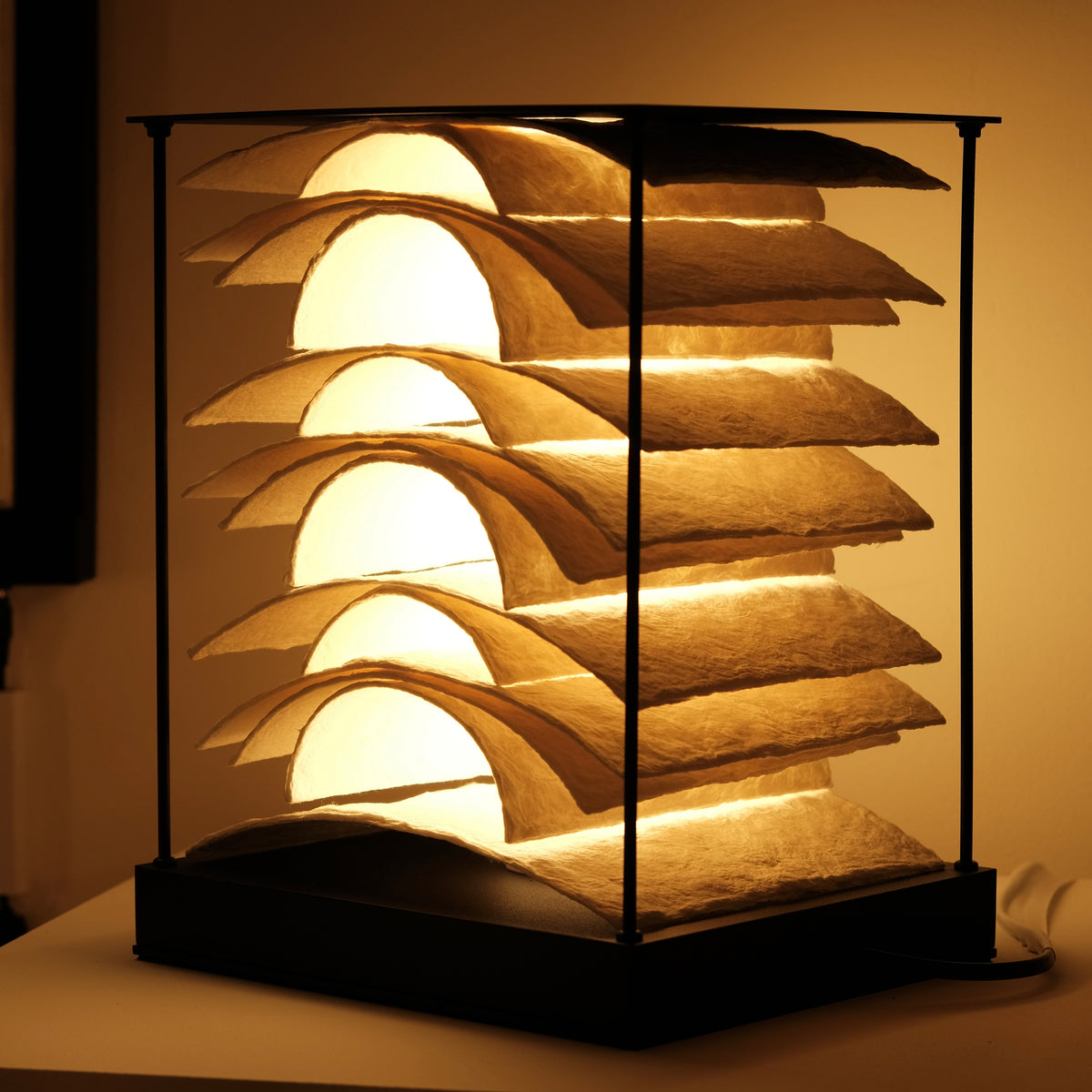
Ahn’s practice begins with giwa, the traditional Korean roof tile. Her interest developed from observing how roof tiles, after fulfilling their original function, were often reused as part of damjang, the walls surrounding traditional Korean architecture. This shift from one function and position to another led Ahn to consider how a familiar form might take on a new role within a different structure. She has since translated the curved profile of giwa through Hanji casting, repeating and stacking each form to create lighting and sculptural objects.
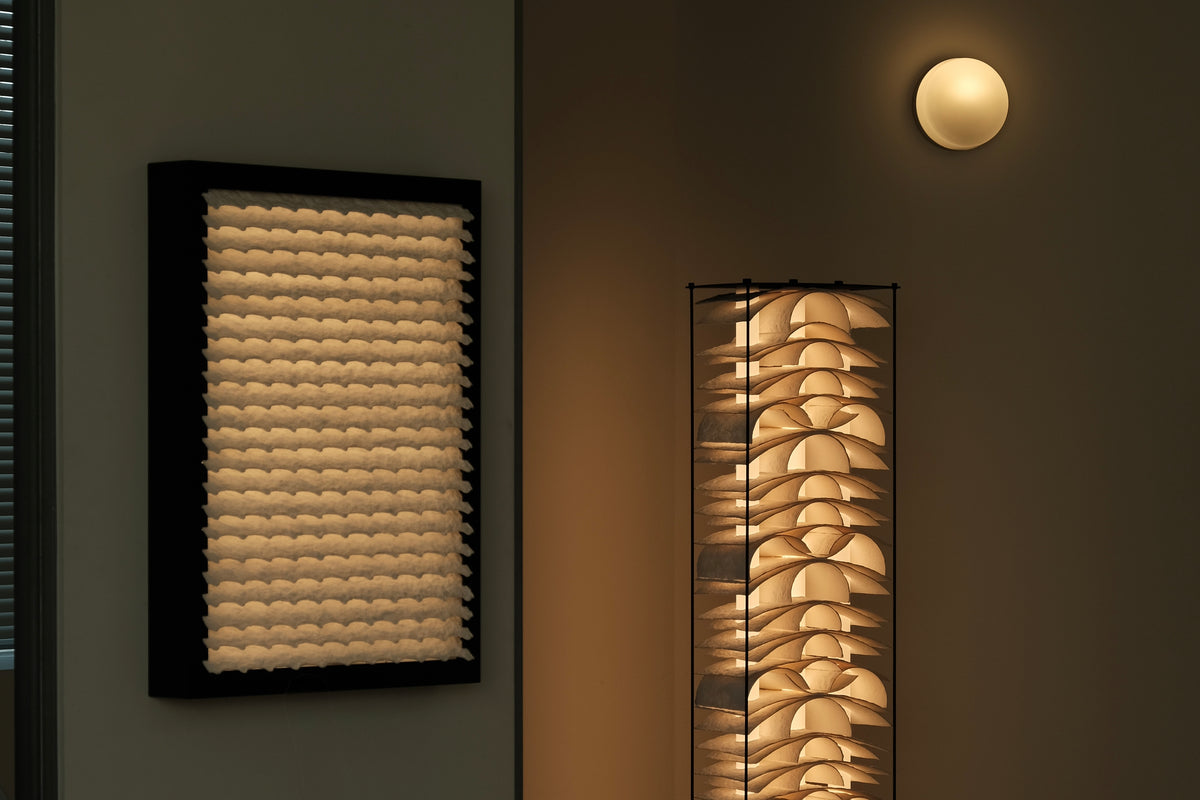
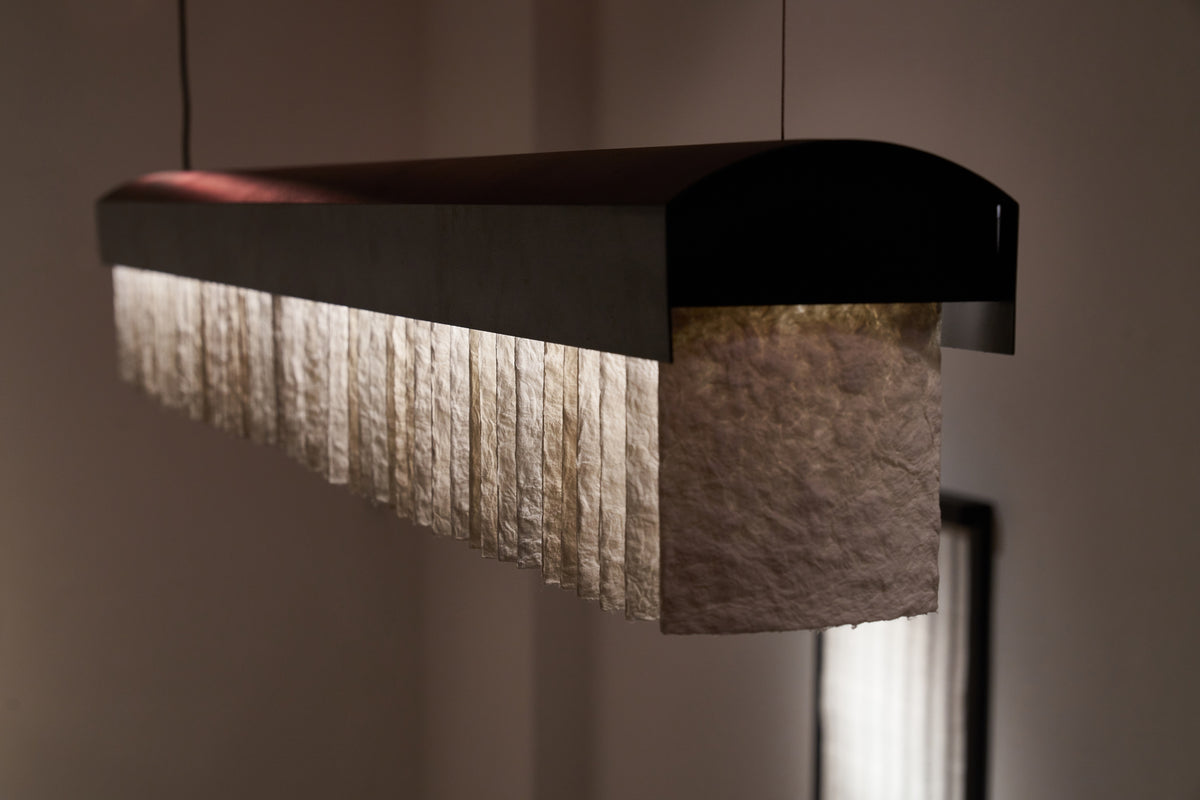
A Place for Giwa explores how the sculptural language of Ahn’s ongoing Giwa Series can inhabit space in new ways. Forms that once rose vertically now extend across walls, floors, and ceilings, while lighting pieces at times become objects in their own right or elements that help shape the surrounding space. Repeated curves, layered Hanji, and the structures that support them create new rhythms and relationships according to where each work is placed.
Hanji remains at the center of Ahn’s practice. Even when made from the same mold and through the same process, each hand-cast piece carries subtle differences in fiber, texture, and surface. Within repeated structures, these variations give each element a distinct presence. Light reveals those differences while also connecting the Hanji, its structure, and the space around it. As form and material emerge through illumination, the work moves beyond a fixed object and begins to influence the atmosphere and perception of its surroundings.
In this exhibition, Ahn looks back at the Giwa Series while also considering how far the material possibilities of Hanji and the visual language she has developed can continue to expand. Just as a familiar form can take on a different relationship when placed in a new position or given a new role, A Place for Giwa considers how the familiar can find its place again, and what new possibilities may emerge through that process.
Noncontempo
2F, 2 Yeonhui-ro 11ga-gil, Seodaemun-gu, Seoul
Exhibition Dates
Nov 2 - 8, 2026
Hours
Monday - Sunday | 12:00 - 19:00
Hi Eunhyeon, Could you briefly introduce yourself?
Hello, I’m Eunhyeon Ahn, a Seoul-based designer working primarily with Korean mulberry paper, Hanji.
If you were to describe this exhibition in just a sentence or two, how would you define it?
Just as roof tiles(Giwa) that have fulfilled their original purpose can become part of a damjang and take on a new function, I too am creating a new place through Hanji and light, rebuilding the form of giwa within everyday spaces. Much like individual pieces of Hanji, each with its own texture, coming together to create a single form and light, this exhibition is also a process of looking at a familiar form in a new way and beginning again.
What was most important to you as you prepared for this exhibition?
When I saw the exhibition space, I began by thinking about how my Hanji works could exist within its contemporary setting. Rather than simply presenting the form of giwa or the lighting itself, I became more interested in how each work might occupy the space, what role it could take on, and how it might relate to the viewer. Ultimately, finding a place of its own for each work became the most important part of the exhibition.
What does giwa represent for you? Has its meaning changed since you first began the Giwa Series?
When I first began the Giwa Series, I was interested in the transformation of roof tiles that had fulfilled their original purpose and were then reused as part of a damjang, becoming part of a new structure. Over time, giwa has come to represent something broader for me—the process of a familiar form finding a new position and a new role.
There are also several new works in this exhibition. How do these pieces build on the earlier Giwa Series, and in what ways do they differ from it?
I wanted to retain the repetition and layered structures that have carried through the Giwa Series, while expanding the forms and ways the works are installed. Earlier pieces were relatively vertical and more structured in form, whereas the new works explore different orientations, including pieces that sit on the wall or exist more like small objects.
In some works, I also began using conventional bulbs in place of LED lighting. I wanted to consider not only the form and atmosphere of the work, but also how it would function in everyday use—making the light source easier to replace and maintain over time.
Why do you continue to work primarily with Hanji? And in these new works, which qualities of the material did you particularly want to bring forward?
Each sheet of Hanji is made by hand, so even when I use the same mold and process, no two are ever completely identical. Subtle differences remain in the surface and texture of each piece, and I see those variations as one of the material’s greatest qualities. Even within a repeated form, each sheet carries a slightly different expression, which is why Hanji continues to remain at the center of my practice.
Why lighting? What role does light play in your work?
For me, light is less a grand theme and more a medium that reveals the materiality of Hanji and the structure of giwa, while connecting the work to its surrounding space. Once light enters the piece, the fibers and layered surfaces of the Hanji become more visible, and the form takes on a different sense of depth and expression.
What do you mean by “the temperature of a space”?
When I speak about the “temperature of a space,” I do not simply mean a visually warm atmosphere. I am more interested in the feeling and mood a work can create as it forms a relationship with the space and with the people who spend time there.
Through the layered Hanji, the stacked structure of giwa, and the soft light that moves between them, I hope the space can feel a little calmer and more at ease. For me, the temperature of a space is created when a work does more than simply occupy it—when it begins to settle naturally into the everyday life of the people within it.
Is there one work that you feel best reflects the direction of this exhibition? Why that piece?
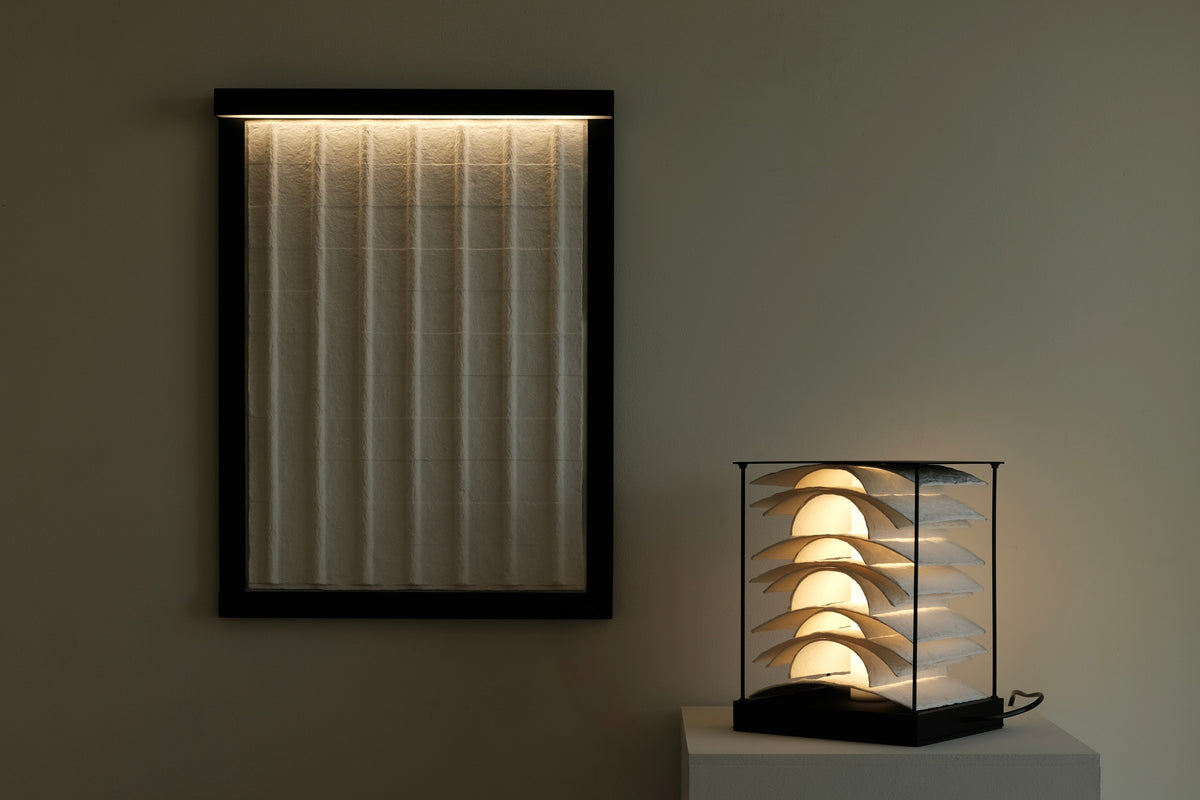
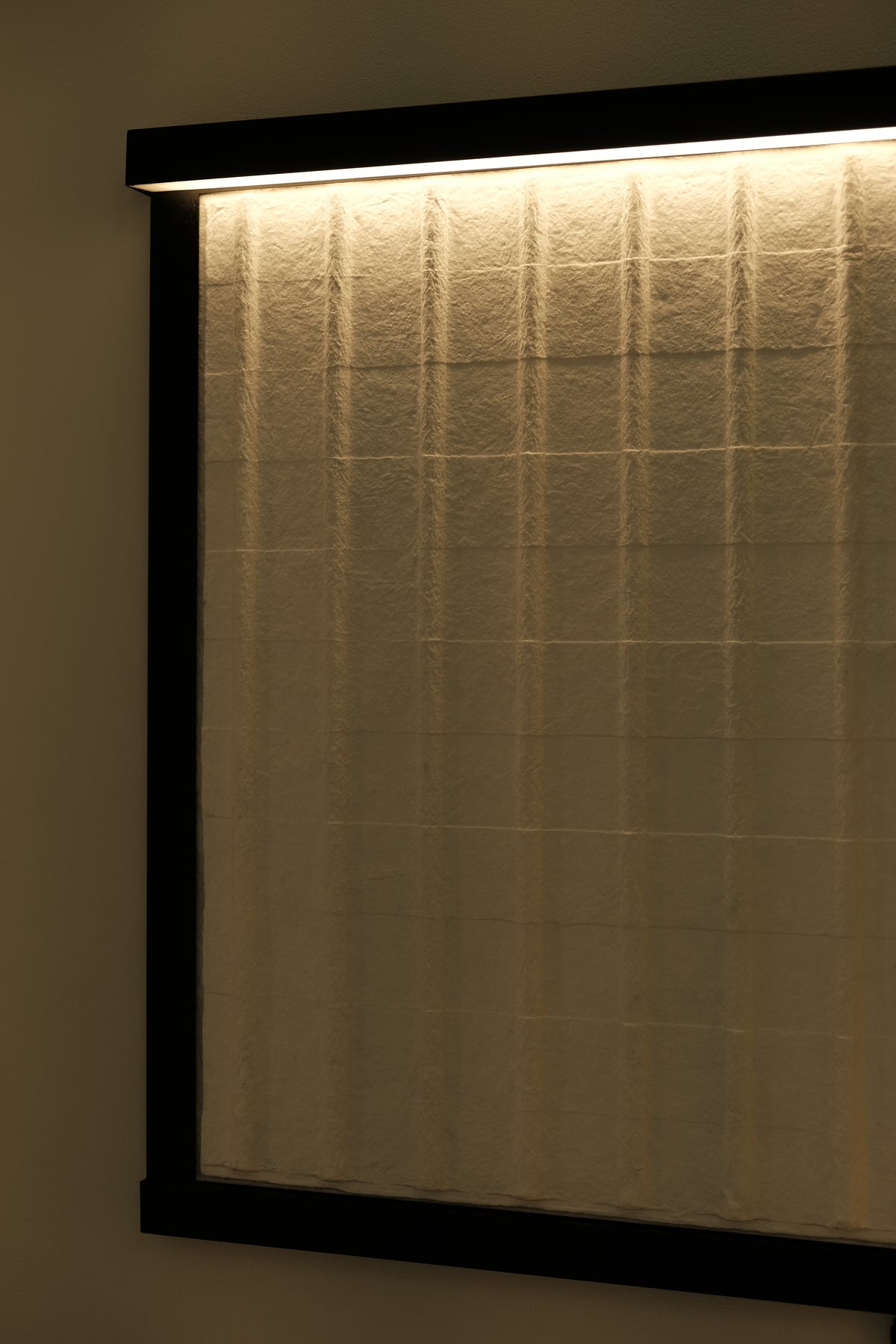
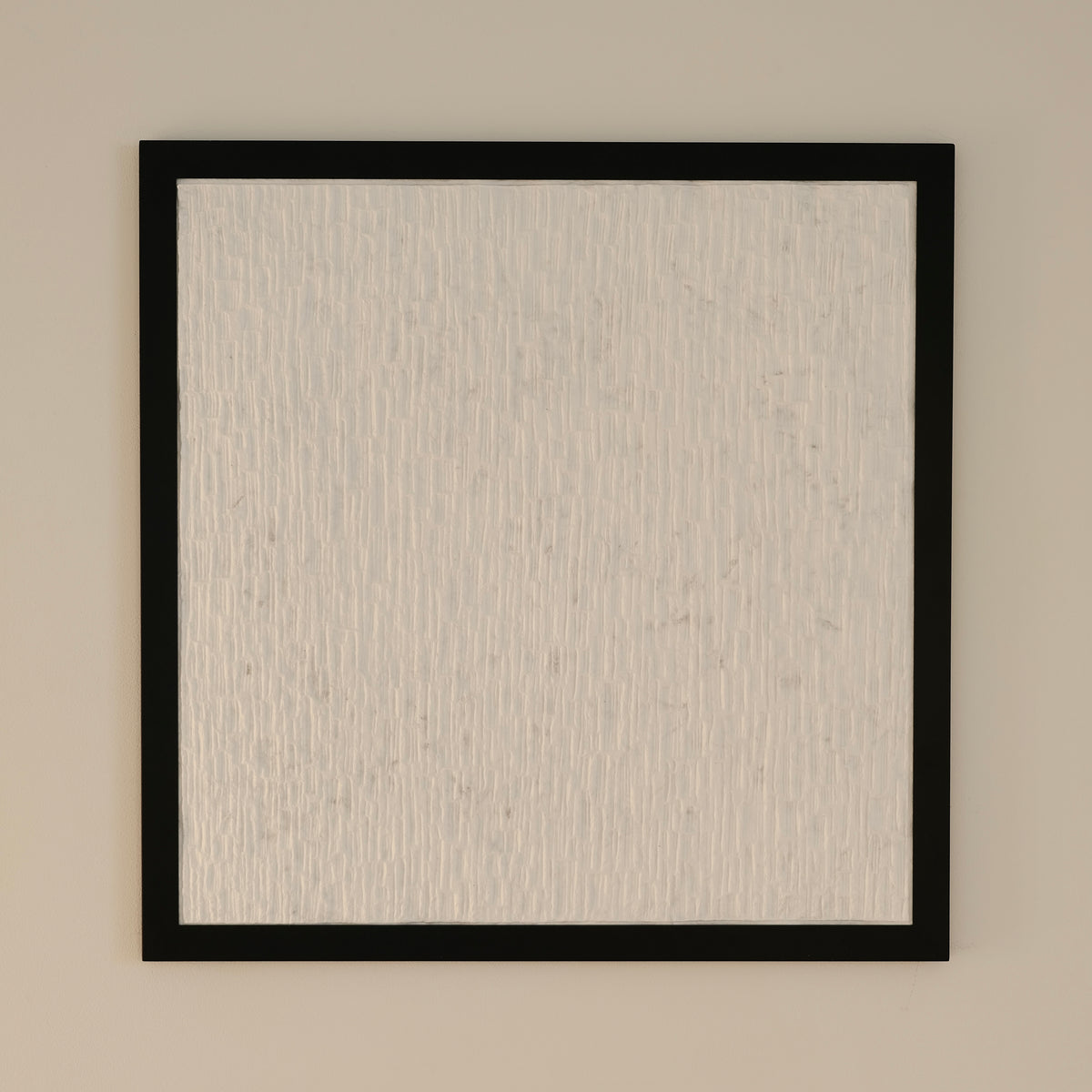
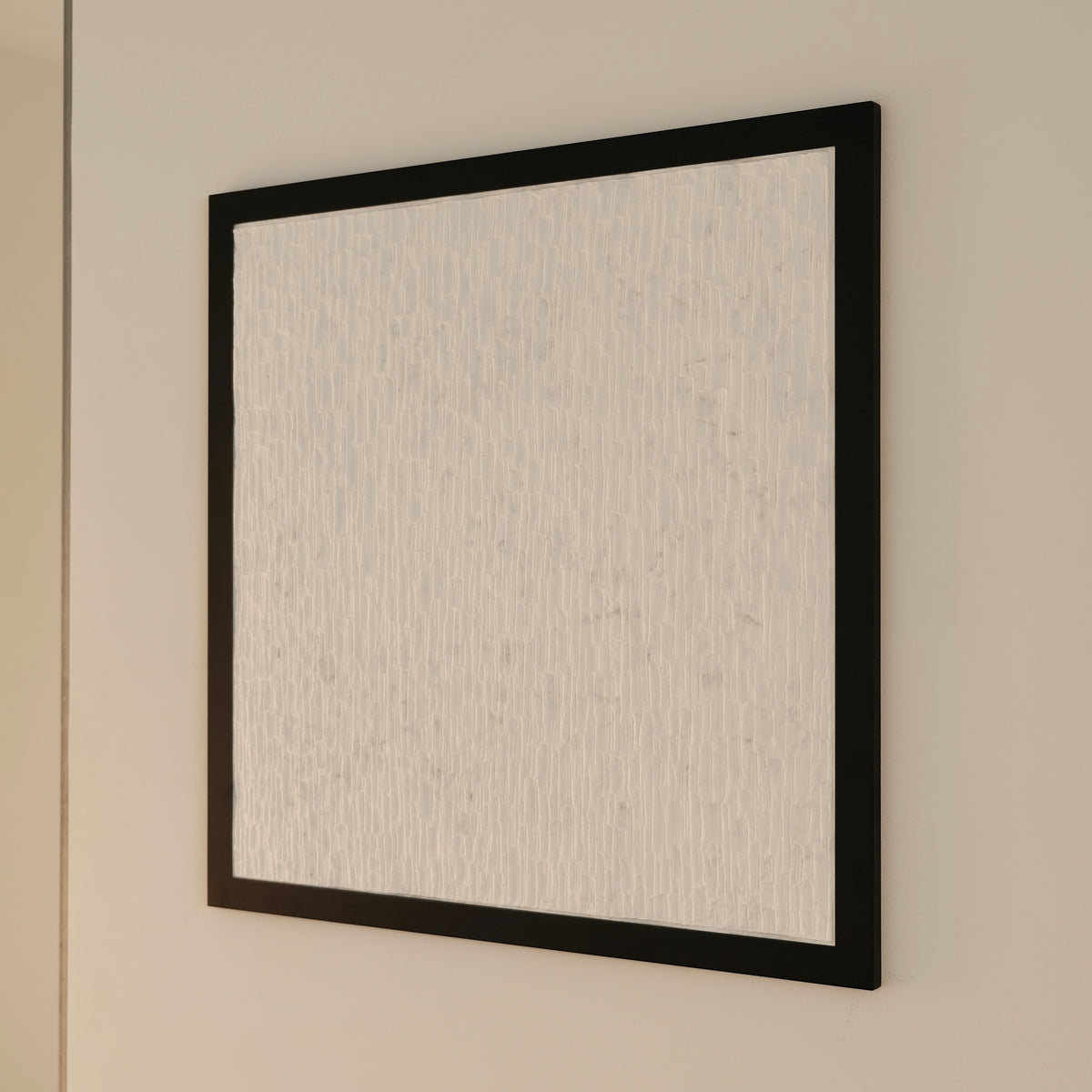
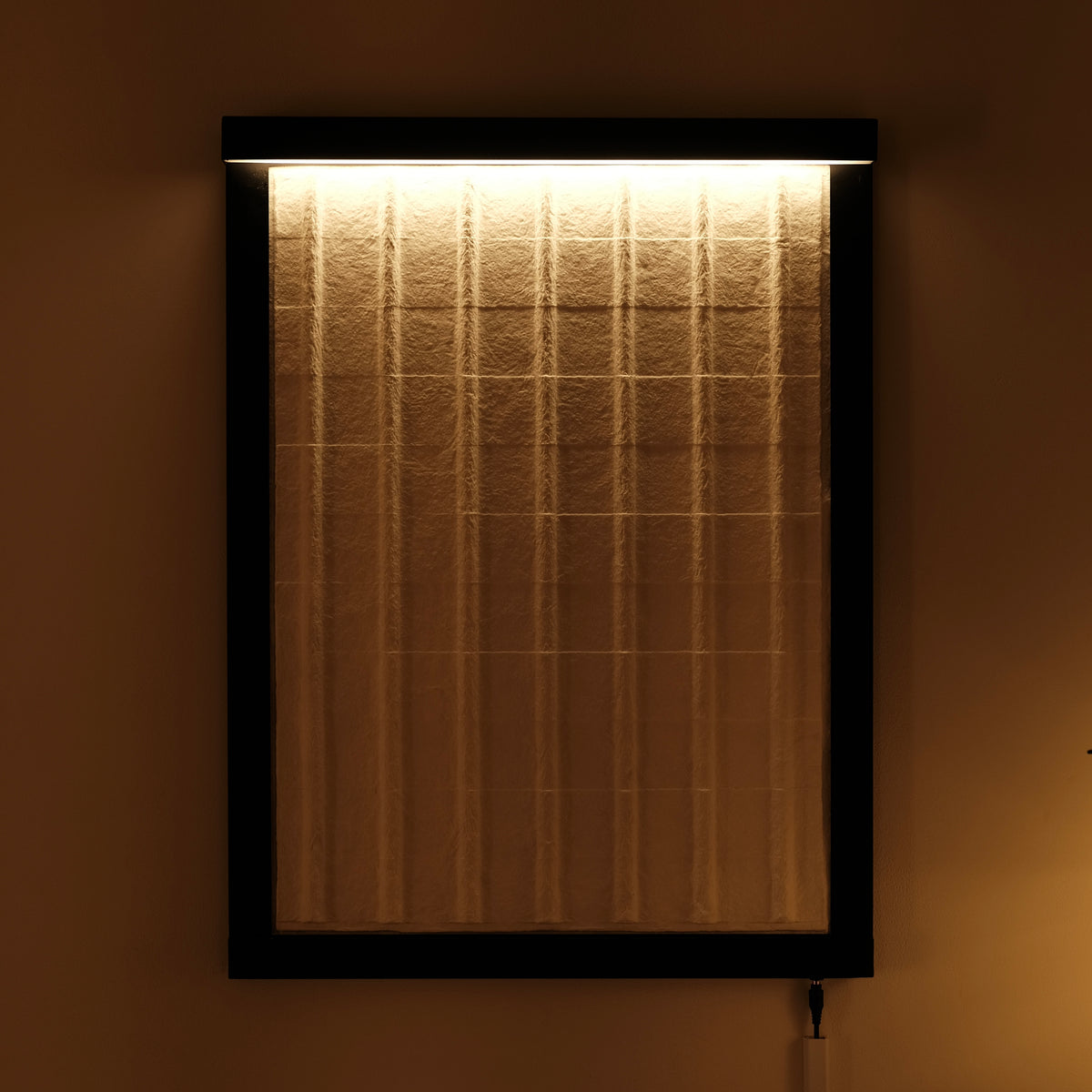
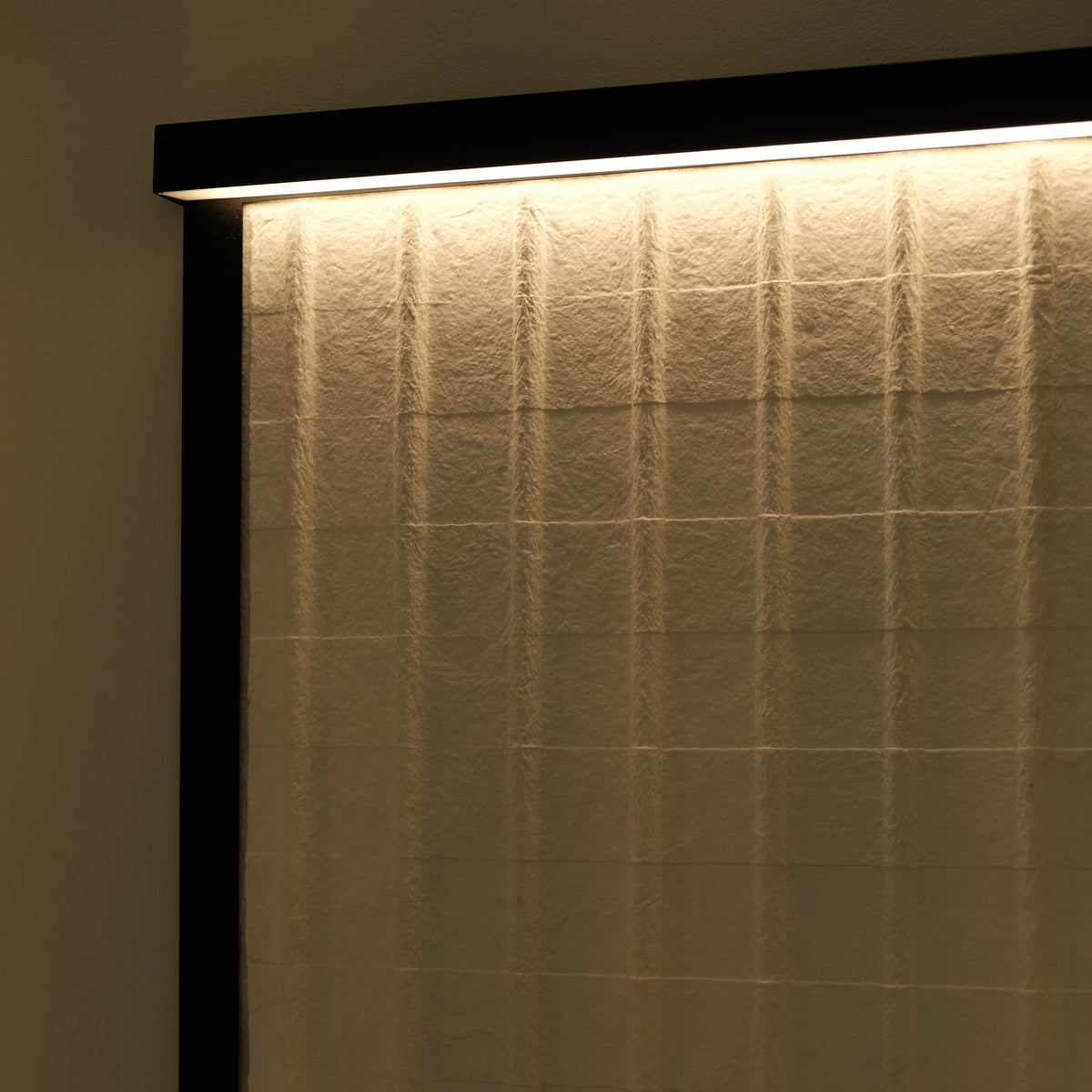
I would choose the new work Mokha (木下), which means “beneath the tree.” In this piece, I use Hanji to evoke the grain of wood and frame it without placing a separate light source inside the work. Instead, the surface of the Hanji is revealed naturally through the light that enters the surrounding space.
Mokha does not directly continue the form or structure of my earlier Giwa works, but it reflects another direction I wanted to explore in this exhibition—the relationship between surface and light through Hanji itself. Rather than staying within a single form or method, I wanted to see how the material could reveal different possibilities within a space.
What do you hope viewers might feel or reflect on as they experience the exhibition?
Just as pieces of Hanji, each with its own texture, come together to form a single structure and a gentle light, I believe we each arrive at where we are through our own layers of time and experience.
I hope viewers can take a moment to reflect on their own journey and where they find themselves now. If the work can offer even a small sense of comfort or calm, I would be very happy.
Where do you see this exhibition within the broader development of your practice?
Rather than a declaration of an entirely new direction, I see this exhibition as an opportunity to return to the foundations of my practice—giwa, Hanji, repetition, and light—and to look at them again with greater clarity.
It feels like a moment to pause within the body of work I have built so far, while also considering where these ideas and materials might lead next.


Inquire About the Collection
Interested in a work from A Place for Giwa? Get in touch for availability, pricing, or additional details. We’d be happy to share more about the collection.