

MUJIN
BANHO
Letting Go of Form, Carrying Tradition Forward
For years, Mujin has worked with the moon jar, not simply as a form to preserve, but as a way of considering how tradition can continue to exist in the present. With his new Banho collection, that ongoing inquiry takes a more radical turn: rather than asking what can be retained, he asks how much can be let go.
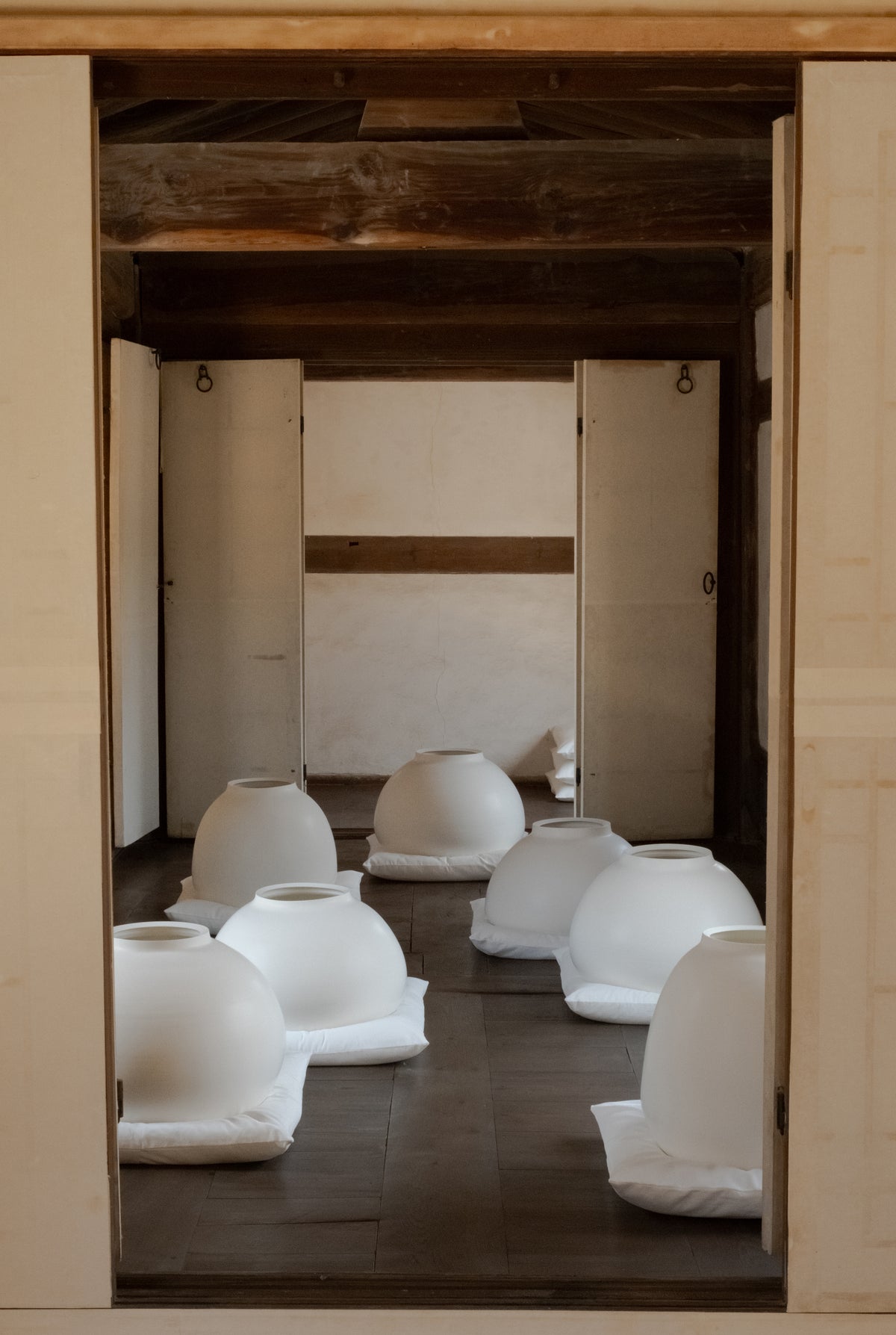
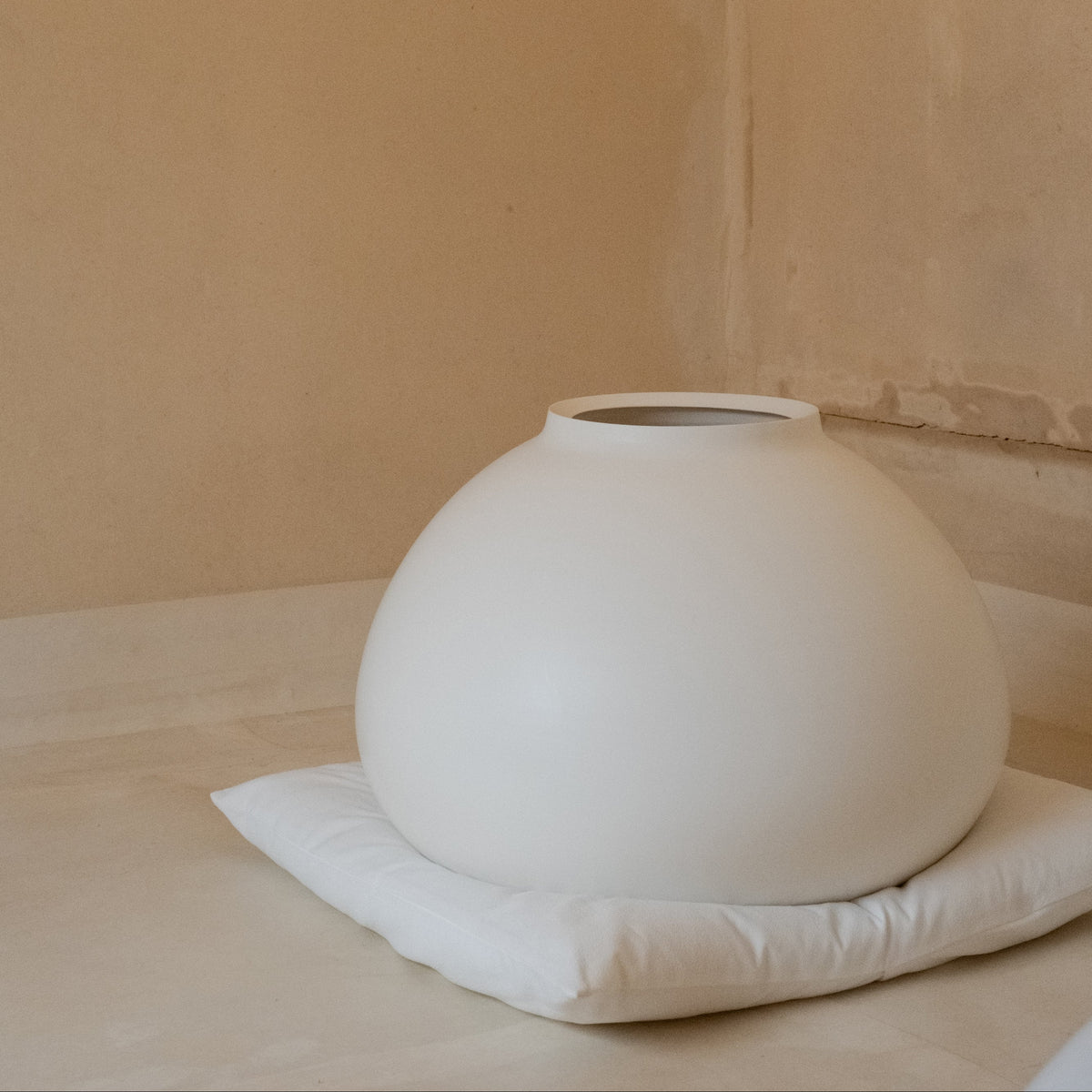
Banho begins with the familiar form of the moon jar, divided in half with its lower portion removed. What remains is placed gently on a cushion. The gesture is deliberately simple, but for an artist who has spent years working within the language of the moon jar, removing half of its form means relinquishing one of its most fundamental conditions.
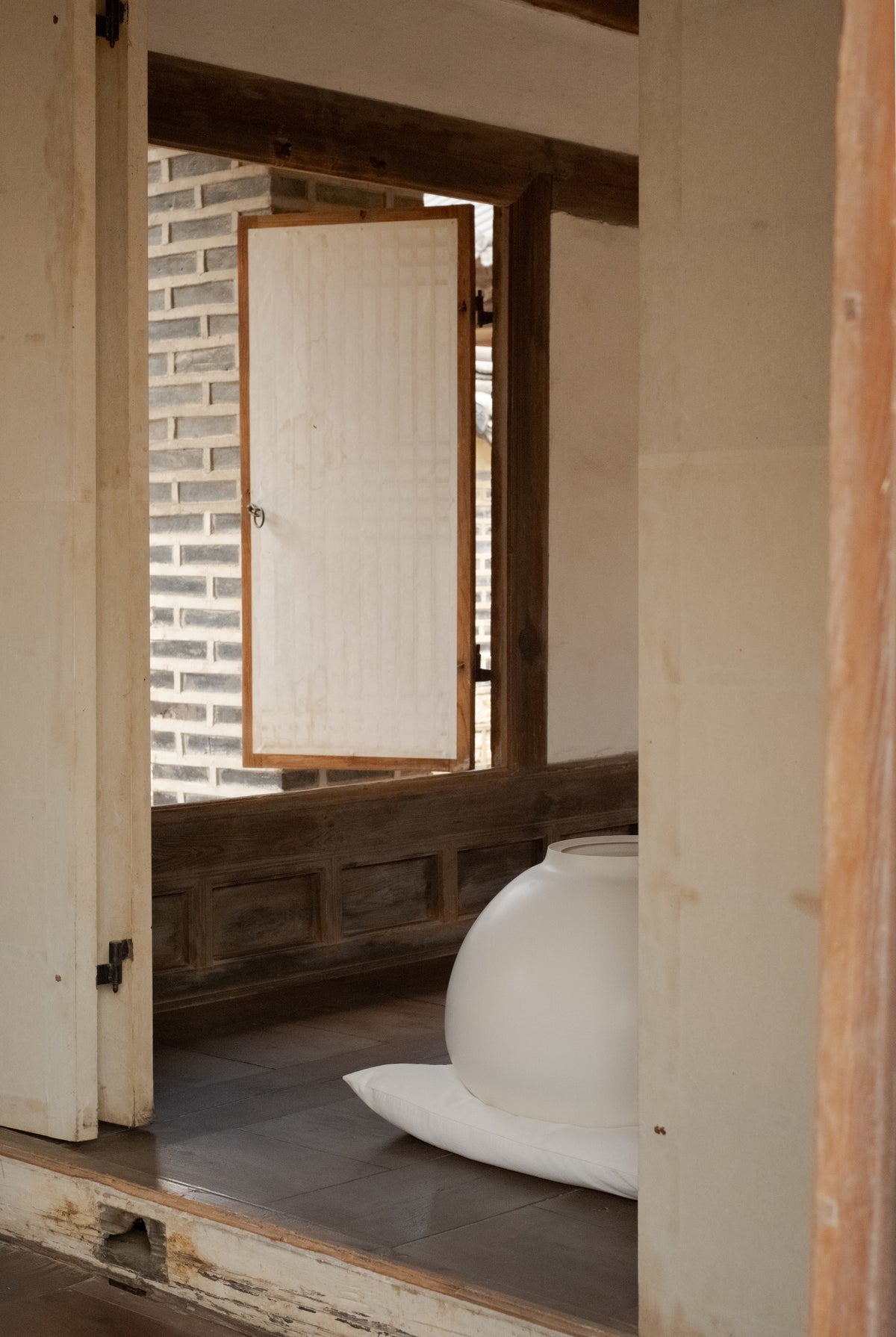
For Mujin, respecting tradition does not mean reproducing its form exactly. He looks instead to the spirit and context accumulated within it. The craftspeople of the past worked with the materials, techniques, and possibilities available to them in their own time; in the same way, Mujin believes that carrying tradition forward requires allowing it to encounter the conditions and sensibilities of the present. To preserve its appearance without allowing it to change would risk leaving tradition fixed in the past.
This thinking has gradually led Mujin toward an act of reduction. In his previous moon jar works, he considered what should remain. In Banho, he turns the question around: how much of what has been preserved can be removed, while still allowing the work to carry the history and spirit from which it came?
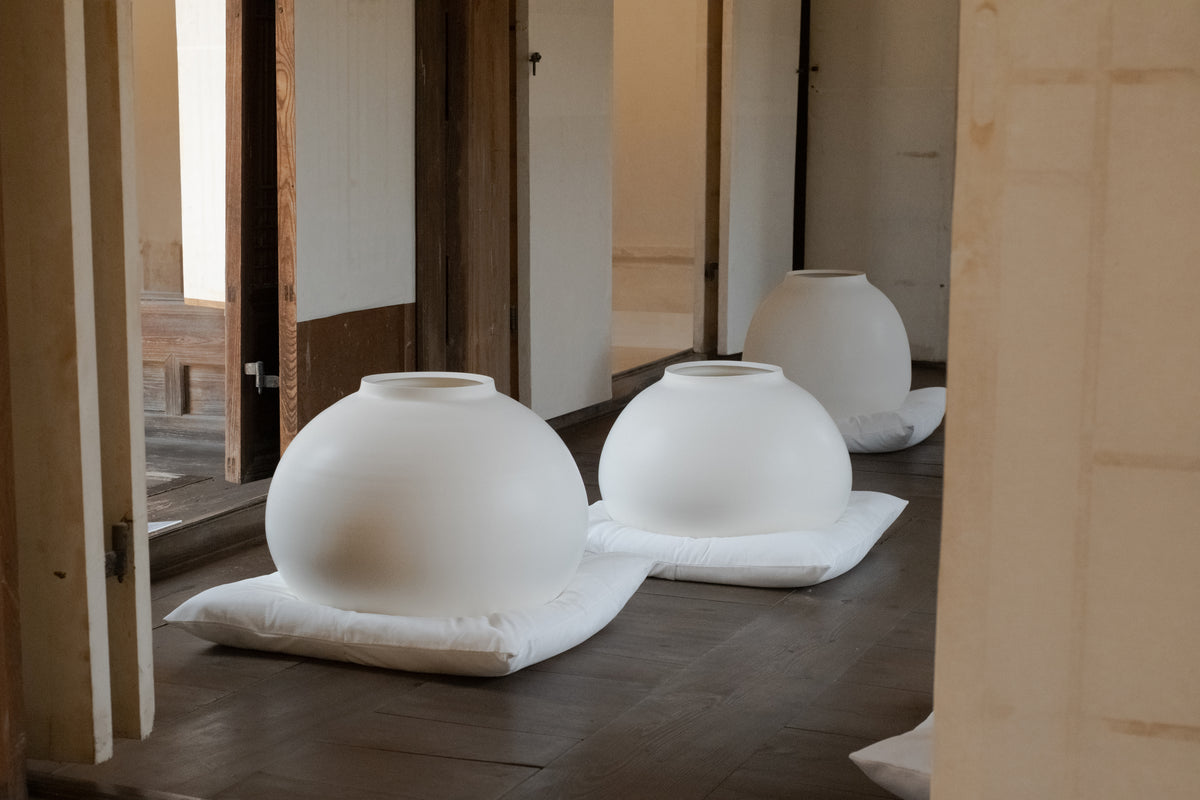
The cushion beneath Banho is integral to this question. As Mujin began removing even the conventions he had previously preserved, he was also conscious of the possibility that reduction could become damage—that in letting go of tradition’s familiar forms, something essential might be lost. The cushion emerged, in part, from this concern. It protects the ceramic physically, but also reflects a desire to set the altered vessel down with care, within the history and context from which it comes.
In this sense, the cushion holds two seemingly opposing gestures at once: letting go and holding with care. It allows Mujin to release the solemn formality traditionally associated with the moon jar without treating that release as a rejection of tradition. Placed low and gently supported, Banho also embodies an openness to receiving the present. The cushion is therefore neither simply a pedestal that elevates the moon jar nor merely a functional support; it becomes a place where respect for tradition and the willingness to let go can coexist.
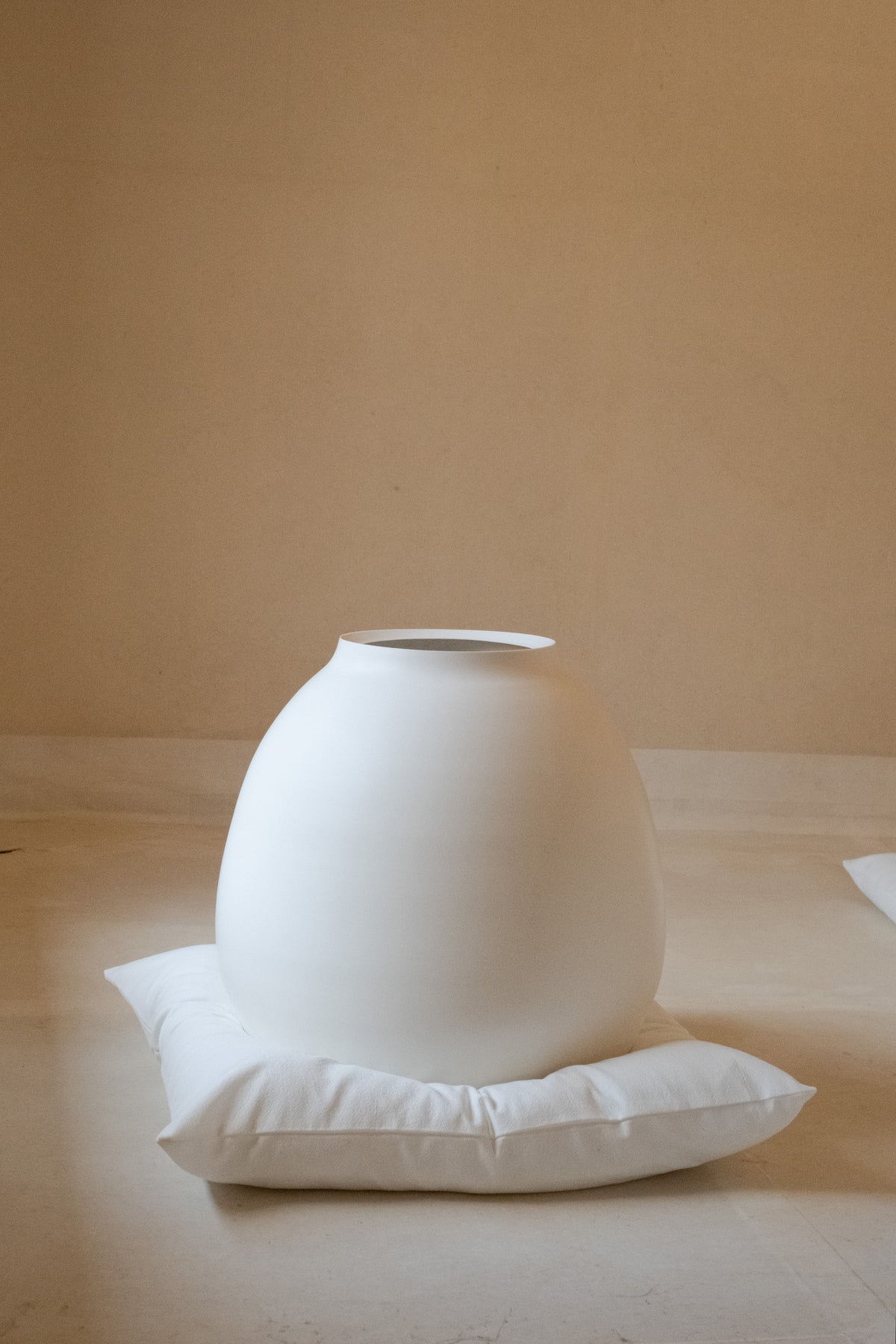
At the heart of Banho are two ideas Mujin has been considering closely: respect for one’s roots and the willingness to accept. Rather than rejecting tradition in order to become contemporary, or preserving it so carefully that it can no longer change, Mujin searches for a way to remain rooted while being open to transformation.
The moon jar, for Mujin, has never been merely an object. He sees within it something deeply human—a presence through which tradition and human life remain closely intertwined, and through which tradition might offer comfort and respect rather than restraint. In Banho, that relationship becomes visible through what is absent as much as through what remains.
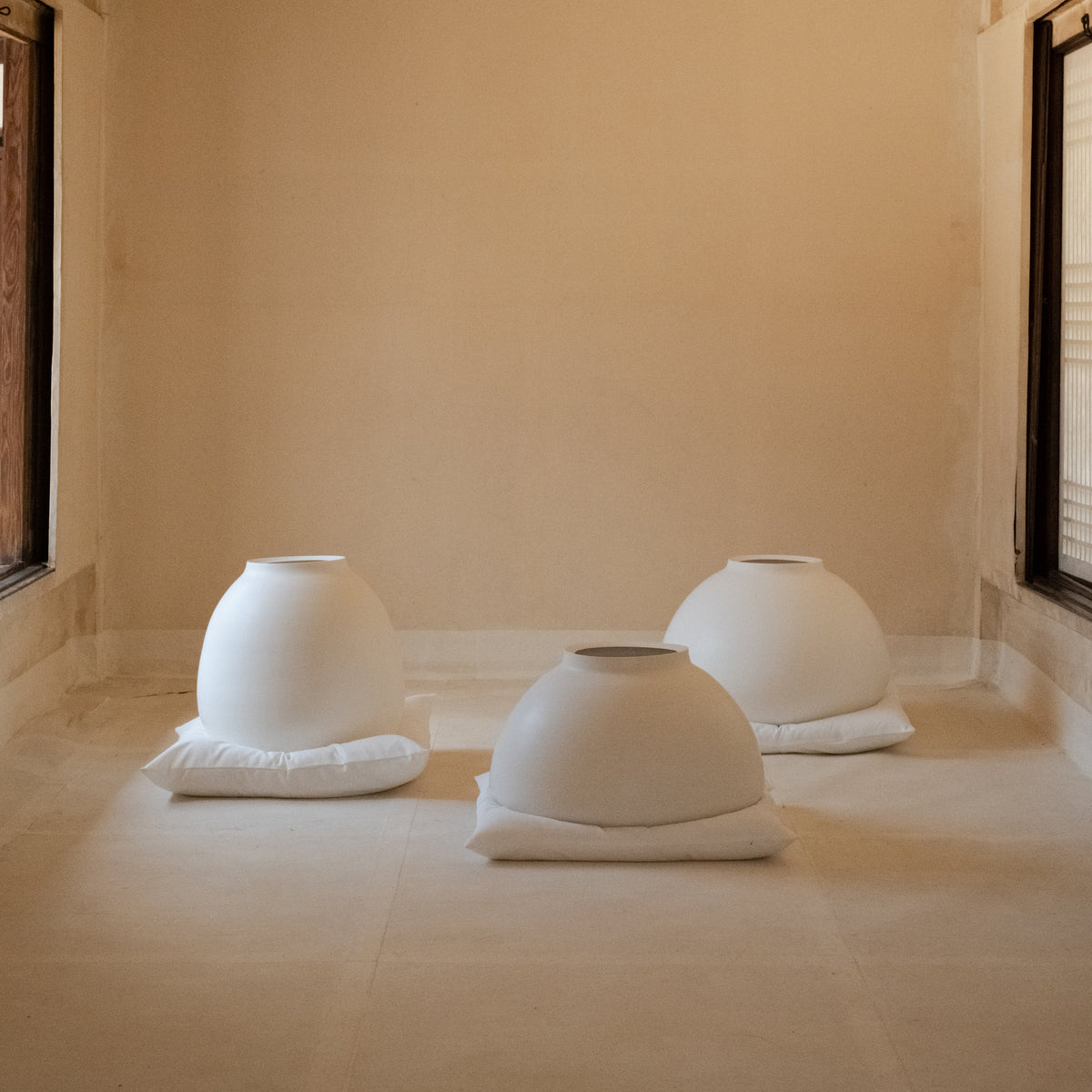
By taking away half of a form so deeply associated with wholeness, Banho does not attempt to diminish the moon jar. Instead, it asks what may become possible when a familiar form no longer needs to remain complete. What is left is not simply half of a vessel, but Mujin’s continuing consideration of how tradition might be carried forward: with respect for where it comes from, and enough openness to let it change.
Inquire About the Collection
Interested in a work from Banho? Get in touch for availability, pricing, or additional details. We’d be happy to share more about the collection.